The Place Command Explained: Why It's One of the Most Powerful Commands You Can Teach Your Dog
The place command isn't just about getting your dog onto a bed—it's about teaching calmness, boundaries, impulse control, and reliable obedience both at home and in public.
By Jesse | Canine Perspective
When most dog owners think about obedience training, they usually picture commands like sit, down, or come.
While those commands are certainly important, there is one command that often has a bigger impact on everyday life than almost any other:
Place.
The place command teaches a dog to go to a designated object—typically a dog bed, cot, platform, or mat—and remain there until released. Unlike a down command, the dog isn't required to maintain one specific position. They can sit, stand, lie down, chew a toy, or simply relax. The only rule is simple:
Don't step off the object.
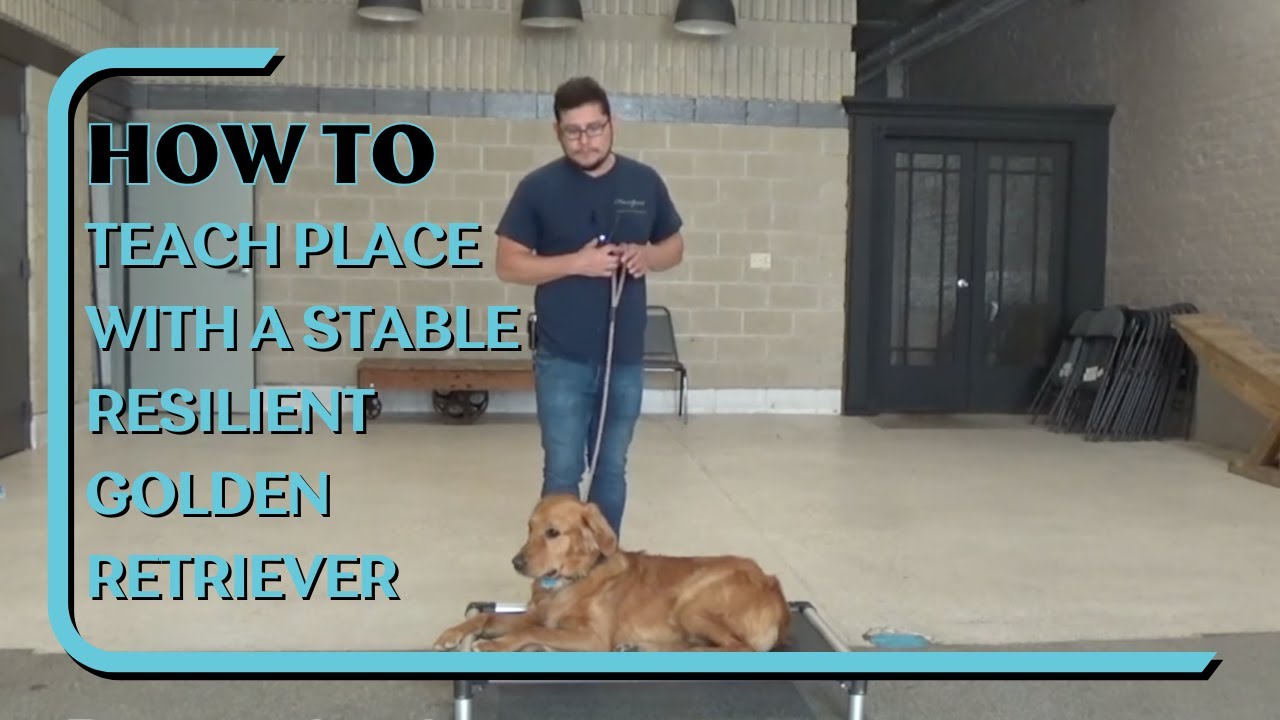
Because of its flexibility, the place command quickly becomes one of the most practical tools a family can use inside the home and in public settings. As explained throughout Maverick's first place training session, it creates structure while still allowing the dog enough freedom to relax naturally.
Watch Jesse Teach Place In Real Time
One of the biggest misconceptions owners have is assuming place is simply another version of "down."
It isn't.
Commands like sit, down, and stay require the dog to maintain a very specific position until released.
If a dog is told to down, they are expected to stay lying down. Sitting up or standing breaks the command.
Place works differently.
Once the dog reaches the designated object, they may:
Sit
Stand
Lie down
Change positions
Relax
Chew a toy
Enjoy a bone
As long as they remain on the object, they are still successfully following the command. That flexibility makes place significantly easier for most owners to reinforce consistently.
Many owners initially assume recall or heel will become their favorite command.
Instead, place often becomes the command they use the most.
That's because it solves many of the problems owners face every day.
Instead of repeatedly telling a dog:
Stop following me.
Get out of the kitchen.
Leave the guests alone.
Quit begging during dinner.
Stay out of the way while I clean.
You simply send the dog to place.
The dog understands exactly where they're expected to be, and everyone else can go about their day without constant management.
One of the more unique aspects of Maverick's training is that verbal commands aren't introduced immediately.
Instead, the first lesson teaches the dog to respond to the sensation of the e-collar.
The process is straightforward:
Pressure turns on.
The dog moves toward the place object.
Pressure immediately turns off.
Over several repetitions, the dog begins connecting the sensation with the correct decision.
Pressure means:
Go to the object.
Relief means:
That was the correct answer.
Only after the dog clearly understands this concept is the verbal cue "Place" layered into the exercise.
Many owners unintentionally create confusion during training.
They repeatedly say:
"Place... Place... Place..."
before reinforcing the command.
The problem is that neither the owner nor the trainer can tell what the dog is actually responding to.
Did the dog obey because it heard the word?
Or because it felt the collar?
Teaching pressure first removes that uncertainty.
Once the dog consistently responds to pressure alone, adding the verbal cue becomes simple. The trainer now knows exactly what communication the dog understands, creating a much stronger foundation for reliable off-leash obedience.
Many owners think place is only one behavior.
It's actually two separate skills.
The Send
The send is simply teaching the dog to move to the designated object when given the cue.
The Stay
Once the dog reaches the object, they must remain there until released.
These two pieces are trained independently before becoming one complete command.
During Maverick's session, early repetitions focused almost entirely on the send. As the session progressed, longer periods on the place cot began reinforcing the stationary portion of the exercise.
One mistake many owners make is trying to advance too quickly.
Instead of gradually increasing difficulty, they suddenly expect their dog to perform perfectly from across the room.
The training shown with Maverick follows a simple progression:
Start approximately one foot away.
Practice five repetitions.
Change approach angles.
Increase distance slightly.
Continue only after consistent success.
Using groups of five repetitions provides an easy way to measure progress.
If the dog succeeds on at least four of the five attempts, training becomes slightly more difficult.
If not, the trainer simply makes the exercise easier again.
This prevents frustration while allowing the dog to progress confidently.
One common training method involves physically walking the dog to the place bed every repetition.
While this may appear effective initially, it often creates a hidden problem.
The dog's cue becomes:
Follow the handler.
Not:
Go to the place object.
When the handler later removes that movement, many dogs suddenly appear confused because part of the cue has disappeared.
Instead, Maverick is expected to solve the problem himself with only minimal guidance when necessary.
This encourages the dog to understand the command rather than simply following human movement.
Owners frequently ask why some trained dogs respond almost instantly.
The answer isn't speed.
It's consistency.
Every command follows the same pattern.
The dog receives the cue.
They have roughly a quarter to half a second to respond.
If they don't, reinforcement occurs immediately.
Because the timing never changes, the dog quickly learns that prompt responses consistently avoid pressure.
Delayed responses simply aren't rewarded with additional time.
Over repeated practice, quick obedience becomes the easiest choice for the dog.
One of the greatest strengths of the place command is how easy it is to incorporate into everyday life.
You don't need dedicated training sessions throughout the day.
Instead, practice while doing things you were already planning to do.
Examples include:
Watching television
Eating dinner
Working from home
Reading a book
Using your computer
Relaxing in the evening
Any time you're stationary, your dog can practice being stationary too.
These real-life repetitions build far more reliable behavior than occasional five-minute training sessions.
Although place is often viewed as an obedience exercise, its benefits extend well beyond simple compliance.
Many reactive, anxious, or overstimulated dogs struggle because they never truly learn how to relax.
The place command teaches exactly that.
Instead of constantly pacing, following owners, barking, or searching for stimulation, the dog learns that remaining calmly in one location is both acceptable and rewarding.
Over time, many owners notice improvements not only in obedience but also in their dog's overall ability to settle and regulate excitement.
The place command may appear simple, but its impact on everyday life is enormous.
Whether you're eating dinner, greeting guests, watching television, working from home, or preparing for reliable off-leash obedience, place creates structure without unnecessary restriction.
Because dogs are free to sit, stand, lie down, or simply relax, owners often find it easier to maintain than stricter stationary commands.
When taught correctly, place becomes much more than a training exercise.
It becomes one of the most useful communication tools you'll ever have with your dog.