Why Heel Is the First Command We Teach with an E-Collar
How Proper Remote Collar Conditioning Builds Focus, Reduces Reactivity, and Creates Reliable Off-Leash Obedience
By Jesse | Canine Perspective
Introduction
One of the biggest misconceptions about e-collar training is that the collar teaches obedience.
It doesn't.
The collar is simply a communication tool.
The real training comes from teaching your dog how to make better decisions and understand how pressure turns on and off.
In this training session with Maverick, a Board & Train alumni from the Lincoln Park neighborhood, we introduce the heel command immediately after establishing his working level. We explain why heel is the foundation of remote collar conditioning, how to correctly determine a dog's working number, and why structured walking often reduces pulling, overstimulation, and leash reactivity long before owners begin addressing more advanced behaviors.
Watch the Training Session
Every dog has a different working level.
Contrary to popular belief, that number has very little to do with breed, size, age, or temperament.
Instead, it reflects the minimum amount of stimulation your individual dog recognizes while remaining calm enough to learn. As training progresses and your dog better understands the collar's communication, that working level often decreases.
Heel is much more than walking politely beside you.
It teaches your dog to:
Focus on you
Ignore distractions
Follow your movement
Learn spatial awareness
Practice self-control
Because pulling and leash reactivity are among the most common behavioral complaints, heel provides the greatest return on investment early in training.
Many reactive or anxious dogs struggle because they never truly disengage from their surroundings.
Heel changes that.
Instead of constantly scanning the environment, your dog learns that paying attention to the handler is the easiest way to navigate the world.
As focus improves, many dogs naturally become calmer, and a significant amount of leash frustration decreases before any direct work on reactivity even begins.
A surprising number of leash problems begin with the handler.
Walking with a constantly tight leash creates tension, frustration, and conflict.
Instead, we teach owners to maintain slack in the leash, allowing dogs room to make choices while using proper leash handling techniques that maximize safety and communication.
The goal isn't to correct every mistake.
The goal is to teach the dog how to succeed.
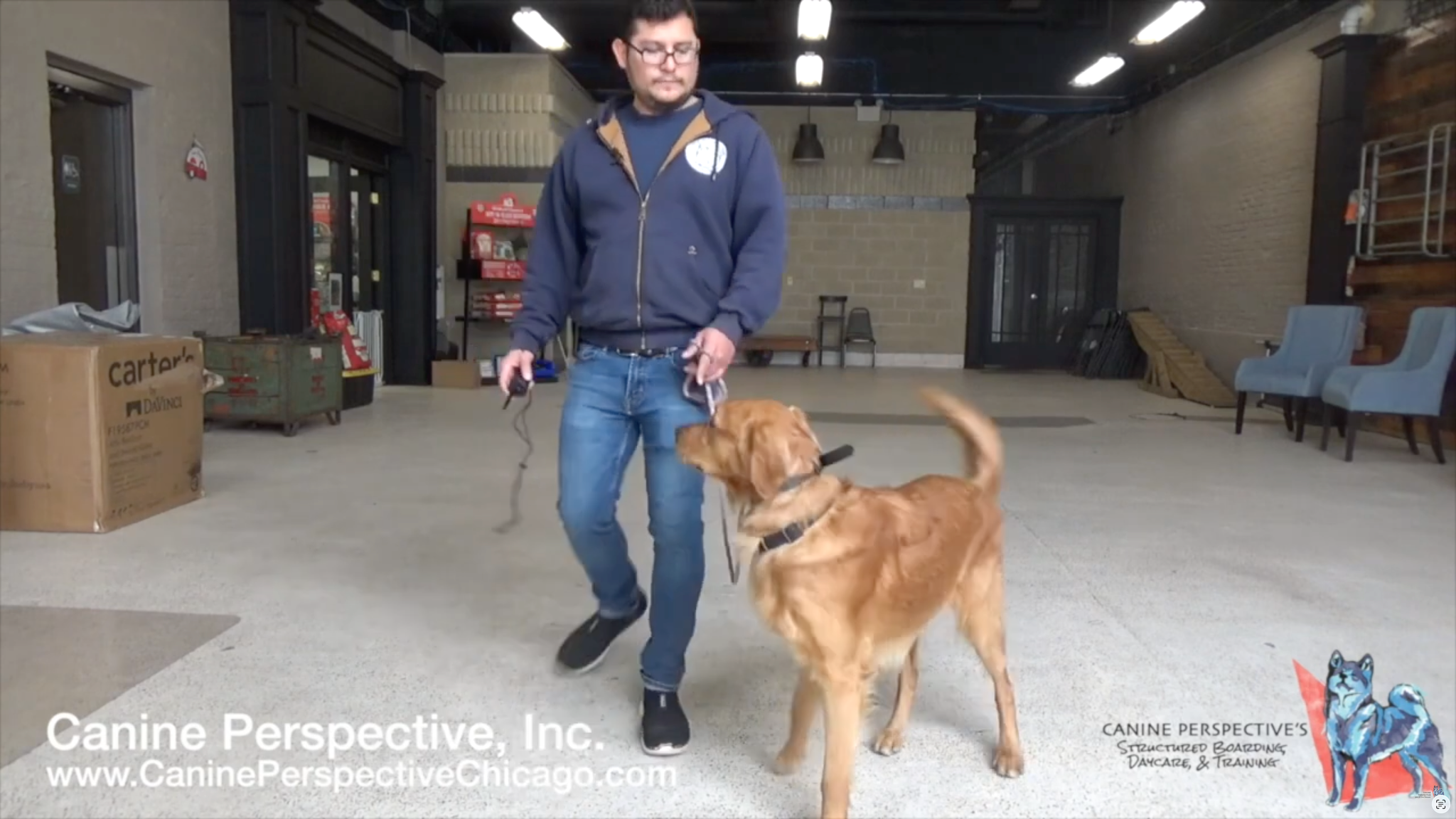
During heel conditioning, Maverick learns that moving back into the correct heel position causes the stimulation to stop.
Over time, dogs begin making better decisions on their own because they understand the pattern rather than simply reacting to corrections.
One of the most common mistakes is using stimulation that is too low.
If your dog barely notices the collar, they are unlikely to connect the sensation with the desired behavior. This often leads to inconsistent training, repeated commands, and frustration for both the dog and the owner.
Effective conditioning means finding a level that is low enough for the dog to think clearly, yet high enough that they respect the communication.
Conclusion
Remote collar training isn't about finding the highest number.
It's about finding the right number.
When owners understand how dogs learn through timing, consistency, and clear communication, the e-collar becomes one of the most effective tools for building reliable obedience and improving everyday behavior.
Heel isn't just another command.
It's the foundation that supports nearly every other aspect of training.