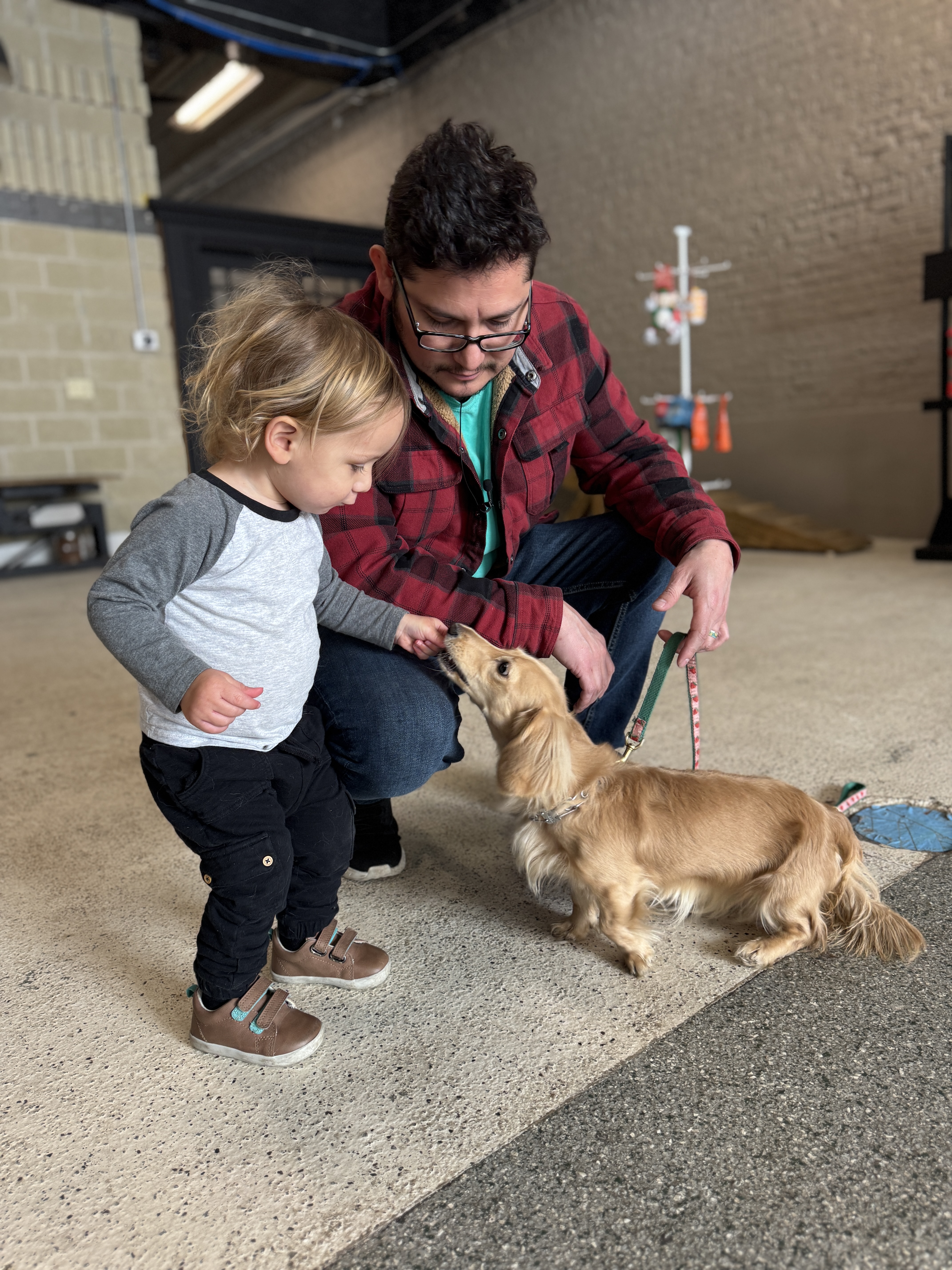
Why Dogs Don't Bite "Out of Nowhere": A Dog Trainer's Analysis of a Child Dog Attack
A professional dog trainer explains the warning signs, common mistakes, and overlooked factors that often lead to dog bites involving children.
By Jesse | Canine Perspective
Dog attacks involving children often generate headlines that claim the attack happened "without warning" or "for no reason." As heartbreaking as these incidents are, they also present an opportunity to educate dog owners about behavior, supervision, and safety.
Not to long ago, an eight-year-old boy was seriously injured after being bitten by a Labrador Retriever at an unlicensed daycare. Many people were surprised because Labradors are commonly viewed as gentle family dogs.
But one of the biggest misconceptions in dog ownership is believing that certain breeds simply don't bite.
After reviewing the news story, I approached it the same way I approach consultations with clients: not to assign blame, but to ask why the behavior occurred.
While none of us can know exactly what happened without seeing the incident, experienced trainers can often identify likely scenarios based on canine behavior and the details that are available.
Understanding those possibilities helps prevent future tragedies.
Watch The Full Video
One of the most common phrases heard after a dog bite is:
"The dog attacked for no reason."
In over sixteen years of working with dogs, that explanation rarely holds up under closer examination.
Dogs are constantly communicating.
The challenge is that most people don't recognize the subtle warning signs before the bite occurs.
A slight head turn.
Avoiding eye contact.
A stiff posture.
A hard stare.
A quick side glance.
Lip licking.
Moving away from interaction.

These signals are often so subtle that owners—and especially children—never notice them until it's too late.
That doesn't mean the warnings weren't there.
It simply means they weren't recognized.
Many people were shocked that the dog involved was a Labrador Retriever.
Unfortunately, this highlights another dangerous misconception.
There is no breed that is incapable of biting.
Any dog with teeth—and even senior dogs without teeth—can bite under the right circumstances.
Breed influences tendencies.
It does not eliminate instinct.
Instead of asking:
"Would a Lab bite?"
A better question is:
"What situation caused this individual dog to feel the need to bite?"
That shift in thinking changes how owners approach prevention.
One of the biggest lessons from this incident is supervision.
According to the information discussed in the video, the children were reportedly left alone with the dog during the attack.
Regardless of breed, age, or training level:
Children and dogs should never be left together without active adult supervision.
Even experienced trainers follow this rule.
At Canine Perspective, despite living with trained dogs, we never assume supervision isn't necessary.
Management is one of the most effective forms of prevention.
Sometimes the safest decision is simply separating dogs and children when full supervision isn't possible.
Watch The News Segment
One concept many owners overlook is that dogs often interact with children differently than they interact with adults.
Many dogs have tremendous respect and trust toward the adults they live with.
Children, however, often behave unpredictably.
They move quickly.
They hug tightly.
They climb.
They reach for toys.
They invade personal space.

To many dogs, these behaviors resemble the behavior of immature puppies rather than adult humans.
That doesn't make the dog "bad."
It simply changes how the dog responds to certain situations.
Because there was no surveillance footage released publicly, nobody can know exactly what happened.
However, experienced trainers naturally begin asking questions such as:
Was the child attempting to hug or kiss the dog?
Was the dog resting when approached?
Was food or a toy involved?
Was the dog already overwhelmed?
Was the dog trying to create distance?
Did the child unknowingly ignore avoidance signals?
These aren't accusations.
They're the types of behavioral questions professionals ask to understand the sequence of events.
Behavior doesn't happen in isolation.
It happens within context.
Another possibility often overlooked is cumulative stress.
Dogs don't necessarily react to one single event.
Stress can build over time.
Imagine a daycare environment filled with:
Multiple children
Constant movement
Loud voices
Limited opportunities to rest
Repeated social interaction
A dog may tolerate these stressors for hours before one final interaction exceeds its threshold.
The child who receives the bite may not actually be the cause of all that stress—they may simply be the last trigger after the dog's emotional bucket has overflowed.
One important distinction made throughout the analysis is the difference between a correction and predatory aggression.
Many bites involving children occur because the dog is attempting to stop an unwanted interaction rather than intentionally hunting or attacking a child.
Examples include:
Pulling ears
Climbing on the dog
Taking a toy
Falling onto the dog
Hugging tightly
Invading resting space
Understanding that difference doesn't excuse the bite.
It helps explain it.
When owners understand why bites occur, they're better equipped to prevent future incidents.
One of the biggest advantages of working with an experienced trainer is learning to recognize behavior long before a bite occurs.
Professional trainers notice:
Changes in body posture
Facial tension
Avoidance behaviors
Stress signals
Resource guarding tendencies
Social pressure
Stacking
These small observations often explain incidents that appear "random" to the average owner.
The goal isn't to blame anyone.
The goal is prevention through understanding.
If there's one takeaway from this incident, it's this:
Never assume a dog is completely safe simply because it's friendly, familiar, or a breed with a good reputation.
Every dog has limits.
Every dog communicates.
Every interaction matters.
The safest families aren't the ones with "perfect" dogs.
They're the ones who understand canine behavior, supervise interactions, respect a dog's space, and intervene before stress turns into conflict.
Dog bite prevention starts long before a bite ever happens.