Reactive or Aggressive? How to Tell the Difference Before It's Too Late
By Jesse | Canine Perspective
Many dog owners assume barking, lunging, and growling automatically mean aggression. In reality, some of the dogs that appear the most dangerous are actually acting out of fear, anxiety, or uncertainty. Knowing the difference can completely change your dog's training plan.
After spending a few minutes evaluating the dog, I often tell them something they weren't expecting:
"Your dog isn't aggressive. He's nervous."
Those two words completely change the training plan.
Recently, I met with a dog named Mookie whose owner was overwhelmed after months of unpredictable behavior. He had already completed two board-and-train programs, worked with trainers, visited the veterinarian, and even considered medication because she wasn't sure what else to do.
The biggest question wasn't how to stop the barking.
The real question was:
Why was Mookie reacting in the first place?
🎥 Watch the Consultation
Mookie wasn't always reactive.
According to his owner, the behavior developed gradually after moving and following previous training experiences. She noticed he became increasingly reactive toward unfamiliar people—particularly when he was with her or when someone unexpectedly entered his space.
Like many owners, she had already tried multiple approaches.
Puppy classes
Two board-and-train programs
Different training equipment
Veterinary recommendations
Considering medication
Yet she still didn't have an answer.
One of the biggest misconceptions is believing dogs simply "become aggressive."
Most don't.
Behavior usually develops because something underneath changes first.
That could be:
Nervousness
Anxiety
Fear
Territorial instincts
Frustration
Lack of confidence
The barking, lunging, and growling are symptoms.
They're not the disease.
If you only correct the outward behavior without understanding what's causing it, you're treating the symptom instead of the problem.
This was one of the biggest teaching moments during Mookie's consultation.
Many reactive dogs appear dangerous.
They bark.
They lunge.
They snap.
But appearances can be misleading.
During the evaluation, I intentionally placed Mookie under controlled pressure to observe how he responded.
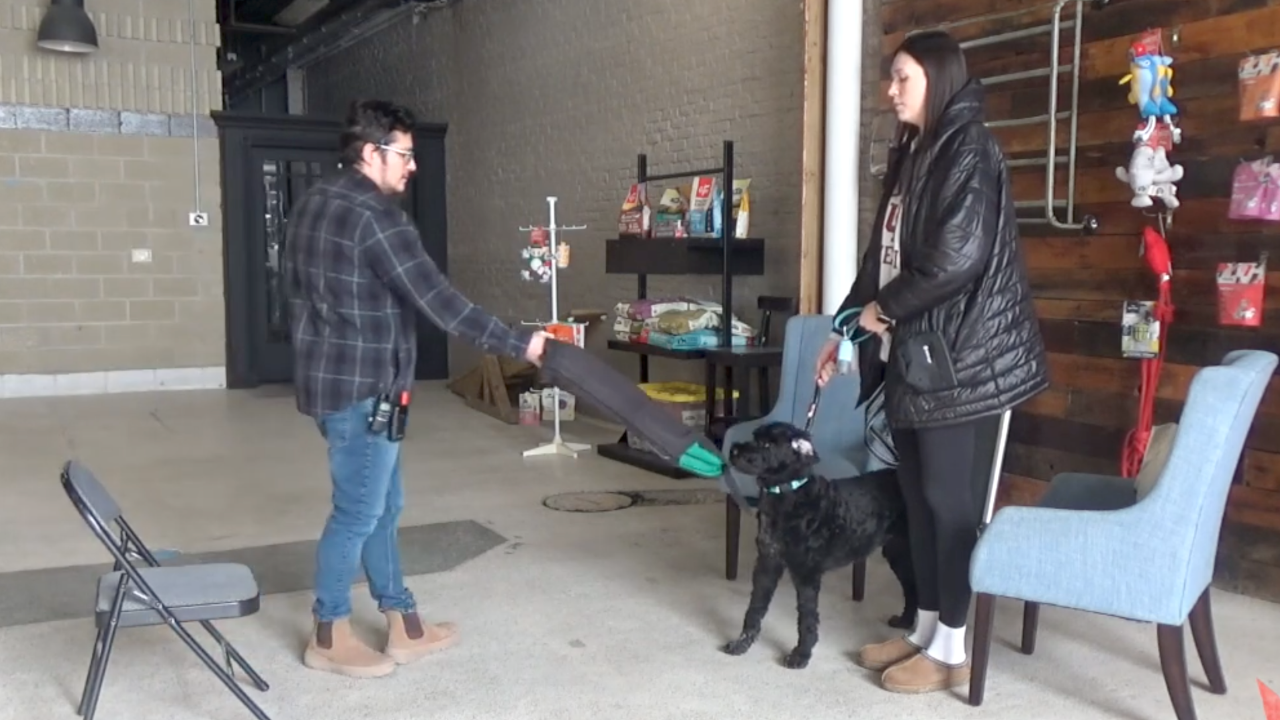
I wasn't trying to make him fail.
I was trying to answer an important question:
What happens when this dog feels trapped?
His response told me far more than his barking ever could.
Rather than confidently driving into conflict, Mookie displayed nervousness, avoidance, and uncertainty before escalating. Those are important distinctions because they point to a very different training approach than a truly aggressive dog would require.
Professional Insight
During every consultation, my first goal isn't to correct the behavior—it's to understand why the behavior is happening. A dog that's fearful requires a different training approach than a dog that's territorial or intentionally aggressive. The more accurately we identify the motivation behind the behavior, the more effective the training plan becomes.
Every dog responds to stress in one of four ways.
Fight
The dog attempts to eliminate the threat.
Flight
The dog attempts to escape.
Avoidance
The dog disengages and tries to pretend the situation isn't happening.
Submission
The dog accepts the pressure once it realizes it cannot fight or flee.
Understanding which response your dog chooses tells you far more than simply labeling them "aggressive."
Mookie had already completed two board-and-train programs.
That doesn't necessarily mean those trainers were bad.
It simply highlights an important reality:
Behavior problems don't always appear away from the owner.
Much of Mookie's behavior centered around protecting the person he had the strongest relationship with.
If those behaviors aren't present during training, they're difficult to address directly.
That's one reason owner education is so important.
The owner—not the trainer—is the constant in the dog's life.
This is one of the most common questions I receive.
Medication has its place.
But medication doesn't teach behavior.
Dogs don't learn confidence from medication.
They don't learn leadership.
They don't learn communication.
Those things come through consistent training and structure.
If the root cause of the behavior is nervousness, then helping the dog learn how to navigate stressful situations is often far more valuable than simply medicating the symptoms.
One topic that came up repeatedly during the consultation was structure.
Not just obedience.
Structure.
A structured environment reduces unnecessary stress.
Dogs understand expectations.
Energy stays lower.
Humans remain in control.
This is one reason our daycare and boarding programs operate differently than many traditional facilities.
Calm dogs make better decisions.
Overstimulated dogs often don't.
Professional Insight
The goal isn't to eliminate stress from your dog's life.
The goal is to teach your dog how to handle stress without becoming reactive.
Owners often ask me whether they should use a prong collar, martingale, harness, or e-collar.
My answer is always the same:
The best tool is the one that's used correctly.
No piece of equipment fixes behavior by itself.
The handler does.
Training tools are simply methods of communication.
When introduced correctly, they help owners provide clearer guidance and better timing.
When introduced incorrectly, they can create confusion and frustration.
If your dog barks at strangers, lunges on walks, guards you, or you've been told they're "aggressive," don't assume that's the whole story.
The first step isn't choosing a training tool.
It's understanding why your dog behaves the way they do.
At Canine Perspective, every training program begins with a professional behavior assessment so we can identify the root cause and create a plan that's tailored to your dog's needs.