How to Prevent Dog Attacks: Safety Tips for Mail Carriers, Delivery Drivers & Dog Owners
Introduction
Every year, thousands of delivery drivers, mail carriers, utility workers, landscapers, and contractors are bitten by dogs while simply doing their jobs.
Unfortunately, many of these bites could have been prevented—not because the dog was "bad," but because people didn't recognize the warning signs or unknowingly put themselves into situations that increased the risk.
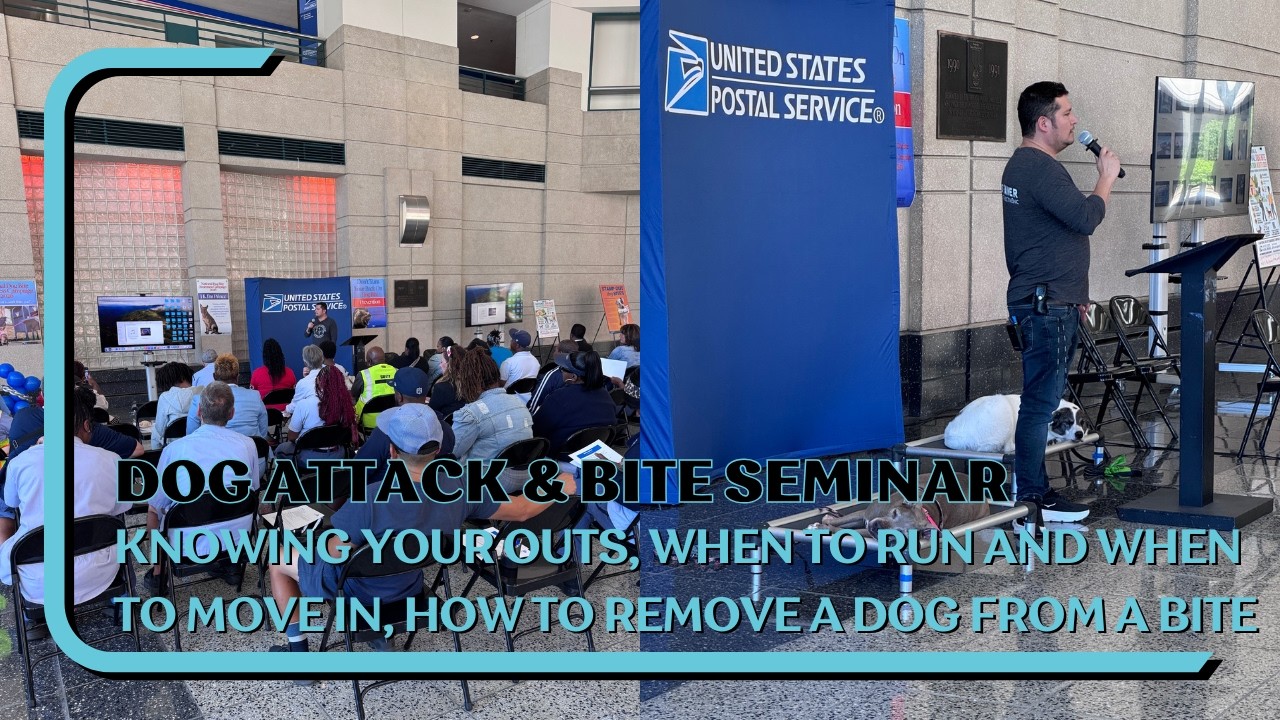
Recently, I had the opportunity to speak at a USPS dog bite prevention seminar, where we discussed real-world dog attack videos, common mistakes people make around territorial dogs, and practical strategies that can help prevent injuries.
Whether you're a dog owner or someone who regularly visits private property for work, understanding canine behavior can make all the difference.
🎥 Watch the Full Seminar
📰Featured on the News
Our USPS Dog Bite Prevention Seminar was recently featured by a local news station, highlighting the importance of educating both delivery professionals and dog owners about preventing dog attacks.
Watch the News Coverage →
One of the biggest misconceptions about aggressive dogs is believing they're simply "mean."
Most aren't.
They're acting on instinct.
Dogs protect:
their family
their home
their yard
their owner
The mail carrier isn't delivering a package from Amazon in the dog's mind.
The dog simply sees an unfamiliar person approaching its territory.
Understanding that instinct is the first step toward preventing bites.
USPS employees, Amazon drivers, UPS drivers, FedEx drivers, landscapers, contractors, and utility workers all have something in common:
They repeatedly enter spaces dogs consider their own.
Many dogs also learn that barking makes people leave.
Every successful bark reinforces territorial behavior.
Eventually, if a door or gate is accidentally left open, that learned behavior can escalate into a bite.
During the seminar we reviewed numerous real-world attack videos.
Several patterns appeared repeatedly.
Standing Too Close To The Door
Standing directly in front of a doorway gives both you and the dog almost no time to react.
Whenever possible, ring the bell and step back approximately 5–8 feet.
Entering Gates Without Checking
Never assume a yard is empty.
Before entering:
Close the gate behind you
Announce yourself
Listen for barking
Scan the property
Assuming Friendly Dogs Are Safe
One of the most dangerous phrases heard every day is:
"Don't worry, he's friendly."
Maybe.
Maybe not.
Every dog should be treated with caution until proven otherwise.
Dogs almost always communicate before escalating.
Watch for:
hard staring
stiff posture
mouth closing
lip licking
forward body weight
ears pinned forward
intense focus
These signals don't automatically mean a bite is coming.
They mean the dog's emotional state is changing.
One of the simplest ways to reduce bite risk is maintaining space.
Space gives you:
time to react
room to retreat
opportunity to assess the dog's behavior
Crowding a territorial dog removes all three.
Owners know their dogs.
You don't.
A dog that's friendly with family may react completely differently to:
mail carriers
Amazon drivers
landscapers
plumbers
electricians
delivery personnel
Treat every unfamiliar dog with caution.
Before walking onto any property, ask yourself:
If this dog charges me…
Where am I going?
Could you:
get back to your vehicle?
step behind a gate?
climb onto a nearby object?
move behind a fence?
Thinking ahead can save valuable seconds.
Every situation is different.
However, several principles consistently improve your odds.
Stay calm.
Avoid unnecessary screaming.
Keep the dog in sight.
Back away slowly if possible.
Don't ignore your surroundings.
Commit to your decision—whether escaping or defending yourself.
Panic often makes the situation worse.
Preparation improves your chances.
Preventing dog bites doesn't begin with the mail carrier.
It begins at home.
Responsible owners should:
secure dogs before opening the door
prevent rehearsing territorial behavior
avoid allowing dogs to rush visitors
train reliable obedience
supervise interactions
One accident can permanently change multiple lives.
Why do dogs attack mail carriers?
Dogs often perceive mail carriers as unfamiliar people repeatedly entering their territory, triggering protective instincts.
Does a wagging tail always mean a dog is friendly?
No. A wagging tail simply indicates arousal or excitement. The dog could be happy, nervous, frustrated, or preparing to react.
How far should you stand from a front door?
When possible, stand approximately 5–8 feet away after knocking or ringing the bell to give yourself time to react if a dog appears.
What's the first warning sign a dog may become aggressive?
A hard stare, stiff posture, or sudden change in body language often occurs before barking or biting.
Should dog owners trust their own dogs around strangers?
No. Even well-trained dogs can react unexpectedly under stress or in protective situations. Responsible management is always important.
Territorial barking, lunging at visitors, charging the front door, or reacting to delivery drivers are behaviors that should never be ignored. The good news is they can often be improved with the right training, structure, and management.
At Canine Perspective , we specialize in helping owners safely address serious behavior issues—including reactivity, aggression, fear, and territorial behavior. Whether you need private training, our Board & Train program, or structured daycare and boarding for behaviorally challenging dogs, we're here to help.
If you're ready to build a safer, more confident relationship with your dog, contact us today to discuss the right training plan for your goals.