How We Handle Serious Dogs At Our Facility
How We Handle Serious Dogs At Our Facility
Not every dog can be handled the same way.
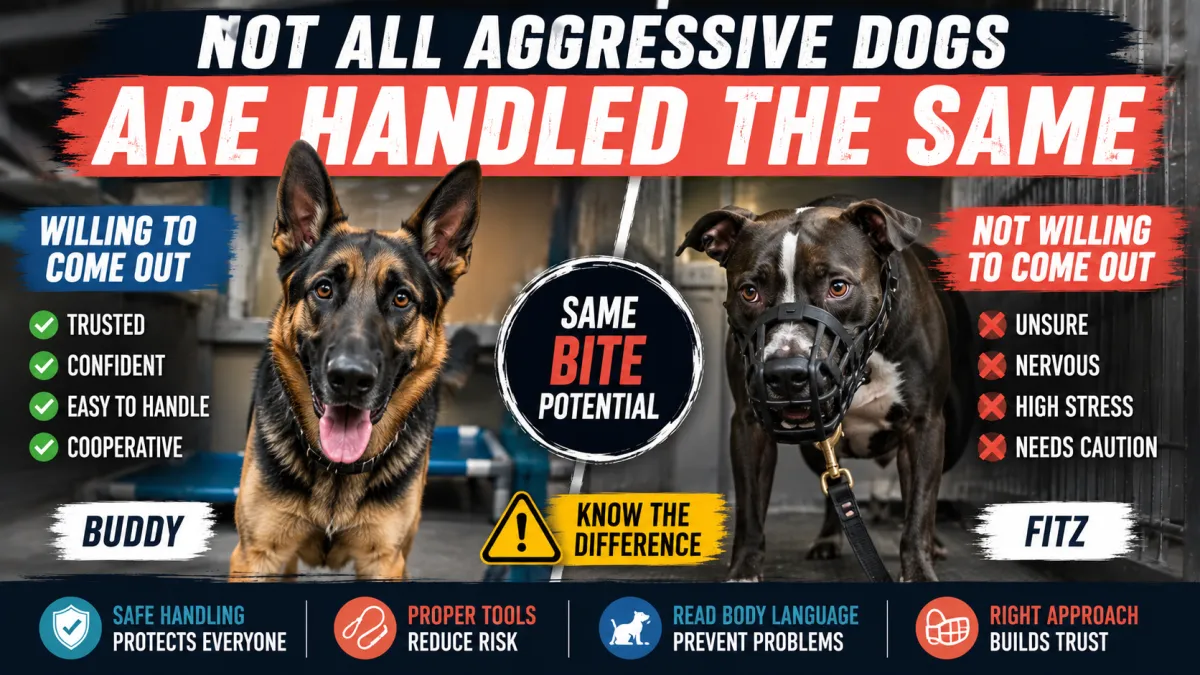
Buddy and Fitz are both serious dogs, but their handling plans look very different because each dog communicates differently and requires an individualized approach.
Some dogs are social and eager to come up to people. Others are nervous, defensive, or genetically predisposed to react when they feel pressured. As a professional trainer, it's my job to recognize the difference and adjust our handling accordingly.
At Canine Perspective, we often work with what I call serious dogs. These are dogs that, if they decide to bite, aren't giving a quick warning nip. They bite with intention and with significant force. That doesn't mean they're bad dogs—it simply means they require a different approach to keep everyone safe while building trust.
Serious Doesn't Mean Aggressive All the Time
One of the biggest misconceptions people have is assuming that a dog with a bite history is always aggressive.
That's simply not true.
Many serious dogs are perfectly manageable once they've built trust with the people handling them. Others may only struggle in certain situations, such as when someone enters their personal space or attempts to remove them from a kennel.
The key is understanding what the dog is communicating instead of forcing the interaction.
Buddy vs. Fitz: Two Serious Dogs, Two Different Approaches
We currently have two dogs that demonstrate this perfectly.
Buddy has been boarding with us for years. Because we've developed a relationship with him over time, he willingly comes forward when we approach his kennel. He's relaxed, comfortable, and understands our routine.
New staff members may initially have to earn his trust, but once they do, handling him becomes straightforward.
Fitz is very different.
Although he's made tremendous progress through training, he's still building confidence. When asked to come out of his kennel, he's hesitant. Instead of voluntarily approaching us, he prefers to stay back.
That hesitation tells us something important.
It means we may have to move into his space to retrieve him—and that's exactly where many bites occur.
A Dog's Willingness to Come Forward Matters
One of the biggest indicators I watch isn't whether a dog is wagging its tail.
It's whether the dog is willing to come forward on its own.
A wagging tail can mean excitement, uncertainty, or even conflict. It doesn't automatically mean the dog is friendly.
When a dog willingly approaches, that's often a sign that the dog feels comfortable with the interaction.
When a dog repeatedly backs away, freezes, or avoids coming forward, it's telling us that entering its space may increase stress and create unnecessary risk.
Listening to those signals allows us to prevent problems before they happen.
Reading Stress Signals
Dogs constantly communicate through body language.
Some of the most common stress signals include:
Lip licking
Freezing
Shaking
Stiff posture
Flinching when touched
Avoiding eye contact
Retreating deeper into the kennel
None of these behaviors automatically mean a dog is about to bite.
They simply tell us the dog is uncomfortable.
The mistake many people make is ignoring those early warnings until the dog feels it has no other option.
Why We Use a Leash Before Entering the Kennel
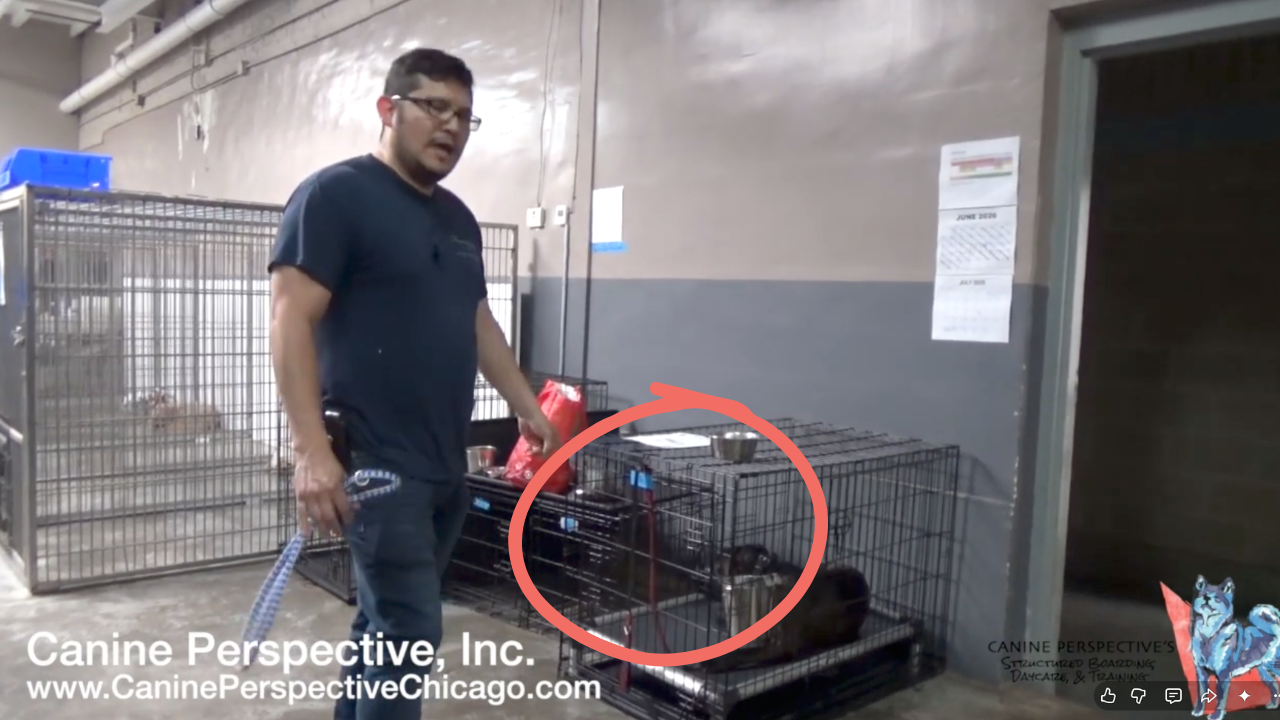
With dogs like Fitz, we intentionally leave a leash attached while he's supervised during the day.
This isn't because we expect him to be aggressive.
It's because the leash allows us to establish contact without stepping into his personal space.
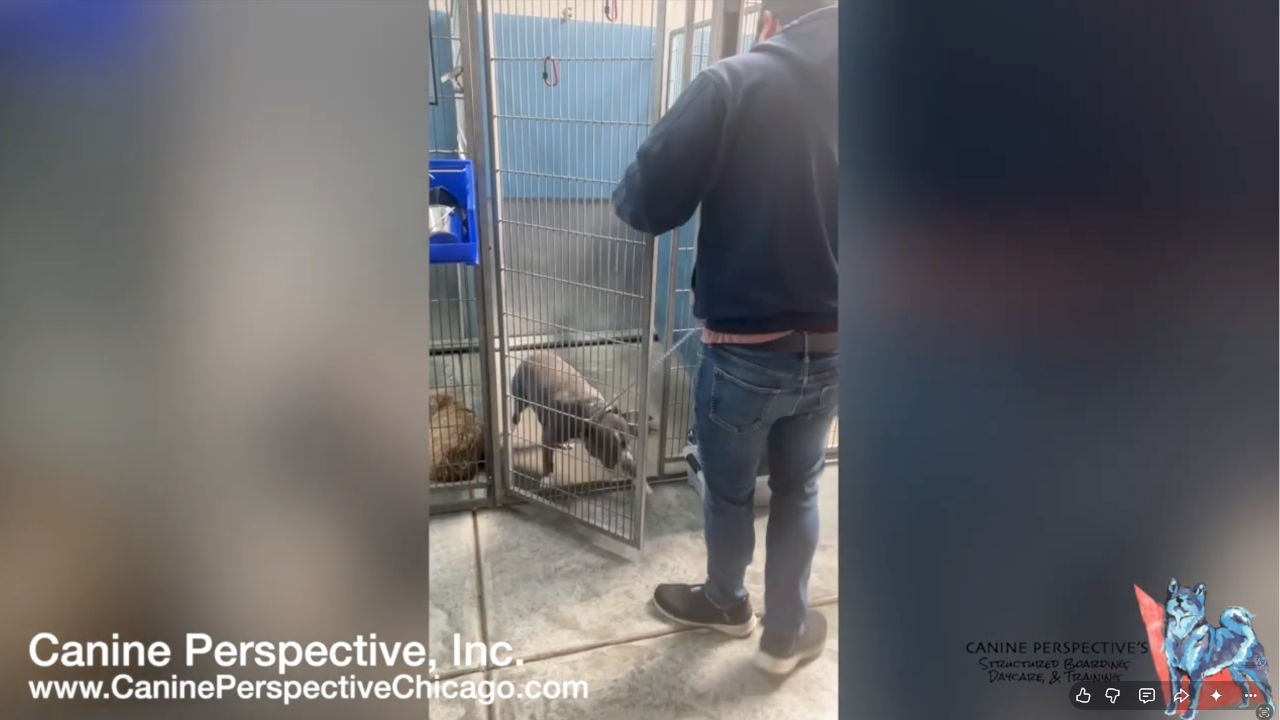
Once we have contact through the leash, we can guide him out calmly instead of cornering him inside the kennel.
That small adjustment dramatically reduces stress for the dog while improving safety for everyone involved.
Good management often prevents problems before they ever develop.
Building Trust Takes Time
Trust can't be rushed.
Some dogs improve quickly.
Others require weeks or even months of consistent handling before they willingly participate.
Fitz has already made tremendous progress since beginning training. He's now comfortable removing and putting on equipment, and his confidence continues to improve every time he visits.
Eventually, we expect him to respond much like Buddy does.
But we don't skip steps just because we've seen improvement.
Progress doesn't eliminate the need for good judgment.
Genetics Play a Bigger Role Than Many People Realize
Many behavioral traits aren't created overnight.
Dogs that struggle with fear, territorial behavior, or leash reactivity often have underlying genetic tendencies that influence how they process stressful situations.
Training helps dogs learn better responses.
It doesn't erase genetics.
That's why successful rehabilitation focuses on understanding the individual dog rather than expecting every dog to respond exactly the same way.
Good Handling Prevents Bad Situations
Professional dog training isn't about overpowering dogs.
It's about recognizing what they're communicating before they feel forced to defend themselves.
By slowing down, reading body language, respecting thresholds, and building trust over time, we can safely work with even serious dogs while protecting both the dog and the people around them.
Every dog deserves to be understood.
Sometimes understanding simply means adjusting how we approach them.
Key Takeaways
Serious dogs require individualized handling.
A dog's willingness to come forward often predicts how safely they can be handled.
Stress signals should never be ignored.
Proper kennel management can prevent defensive aggression.
Building trust takes time but leads to safer, more reliable handling.
Understanding canine body language is one of the most valuable skills any dog owner or trainer can develop.
Frequently Asked Questions
What is a serious dog?
A serious dog is one that has the potential to inflict significant injury if it bites. These dogs require experienced handling, careful management, and trust-building—not fear or punishment.
Does a wagging tail mean a dog is friendly?
No. A wagging tail only indicates arousal or emotion. You must evaluate the dog's entire body language to understand how it's feeling.
Why do professional trainers use leashes inside kennels?
A leash allows the handler to establish safe contact without crowding the dog's personal space, reducing the likelihood of defensive behavior.
Can fearful dogs improve with training?
Yes. With proper training, consistent routines, and patient handling, many fearful or reactive dogs become significantly more confident and easier to manage.
Need Help with a Reactive or Serious Dog?
If your dog displays fear, reactivity, territorial behavior, or has a history of biting, don't wait until the situation gets worse. The earlier you address these behaviors, the safer and more manageable they become.
At Canine Perspective, we specialize in working with dogs that many trainers aren't comfortable handling. Whether your dog needs behavior modification, confidence building, or structured management, we'll develop a training plan tailored to your dog's temperament and your goals.
If you're looking for a boarding facility that understands reactive and behaviorally challenging dogs, our structured boarding and daycare programs are designed with safety, routine, and continued training in mind. Every dog is evaluated and handled according to their individual needs—not treated with a one-size-fits-all approach.
Ready to help your dog make real progress? Contact Canine Perspective today to schedule a consultation, learn more about our training programs, or see if your dog is a good fit for our structured daycare and boarding services.
Contact us today and let us help you build a safer, more confident relationship with your dog.