How to Safely Remove a Fear Aggressive Dog from a Kennel | Professional Dog Training Protocols
By Jesse | Canine Perspective
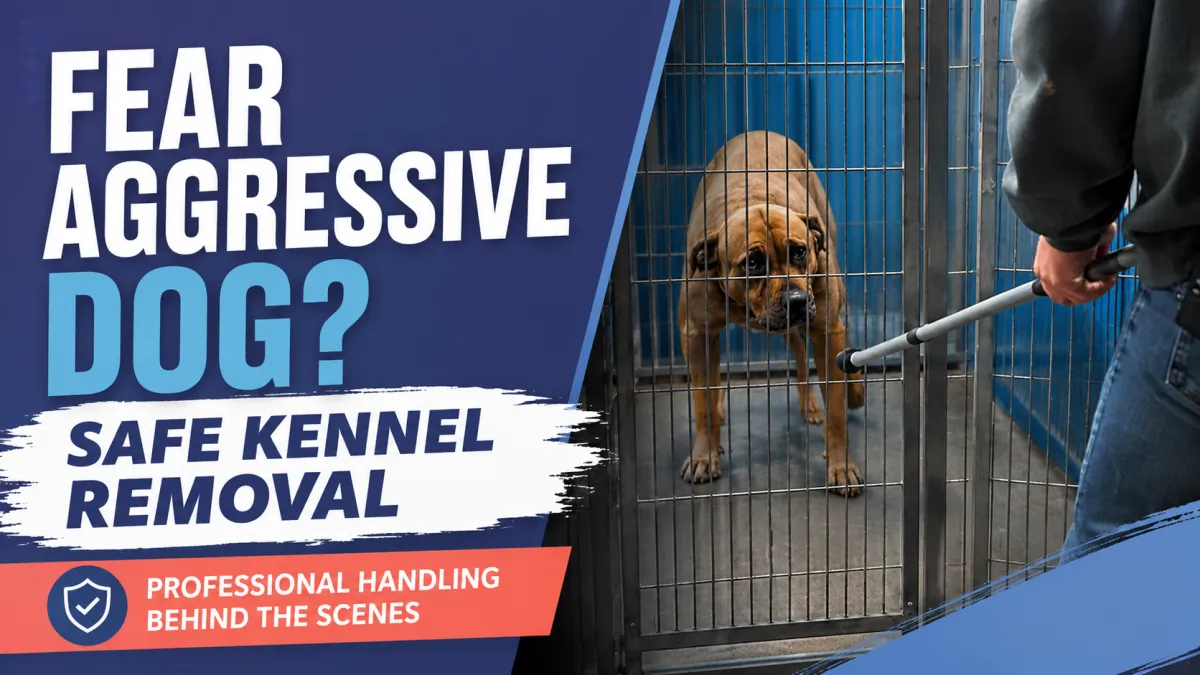
Proper kennel handling techniques reduce risk while minimizing stress for fear aggressive dogs.
Watch the Video
When a Fear Aggressive Dog Won't Come Out of the Kennel
One of the biggest challenges with fearful dogs isn't obedience—it's simply being able to safely handle them.
Recently we welcomed Cambria, a fear aggressive dog, into our two-week Board & Train program. Before arriving here, a previous boarding facility was unable to care for her because staff couldn't safely remove her from the kennel.
Situations like this are more common than many people realize.
The good news is that fear aggression doesn't always require force—it requires the right handling strategy.
Fear aggression is very different from a dog that's actively looking for conflict.
Dogs like Cambry generally aren't trying to dominate people or attack without warning.
Instead, they're communicating:
"You're getting too close."
"I don't feel safe."
"Please leave me alone."
If those warnings aren't respected—or if the dog has no other perceived option—they may escalate into snapping or biting.
In Cambria's case, her aggression level was relatively low. She displayed defensive behavior rather than offensive intent, making it possible to safely work through the situation using proper protocols.
Most boarding kennels are designed for cooperative dogs.
When a fearful dog refuses to come out, staff are often left with very few safe options.
Trying to immediately:
reach inside,
attach a leash,
or physically grab the dog
can easily trigger a defensive bite.
Many facilities simply aren't equipped—or trained—to safely manage these situations.
That's why specialized behavior programs use different handling techniques.
Watch Cambria's Consult
The biggest mistake people make is trying to immediately slip a leash over the dog's head.
Instead, we first make controlled contact using a lightweight object.
In our case, we used a simple broomstick.
Why?
Because the dog doesn't know that the stick isn't part of the handler.
This allows us to safely determine how the dog is likely to respond before placing our hands anywhere near the dog's mouth.
If the dog chooses to bite, the object—not the handler—is what receives the bite.
Only after evaluating that response do we proceed toward safely placing a slip lead on the dog.
This dramatically reduces unnecessary risk while keeping the interaction calm and controlled.
Every bite tells us something.
Some dogs deliver quick warning nips.
Others commit to a full-force bite.
Over the years we've had dogs bite with enough force to snap training tools in half.
That information matters.
It helps determine:
the dog's confidence,
intensity,
commitment,
and overall level of risk.
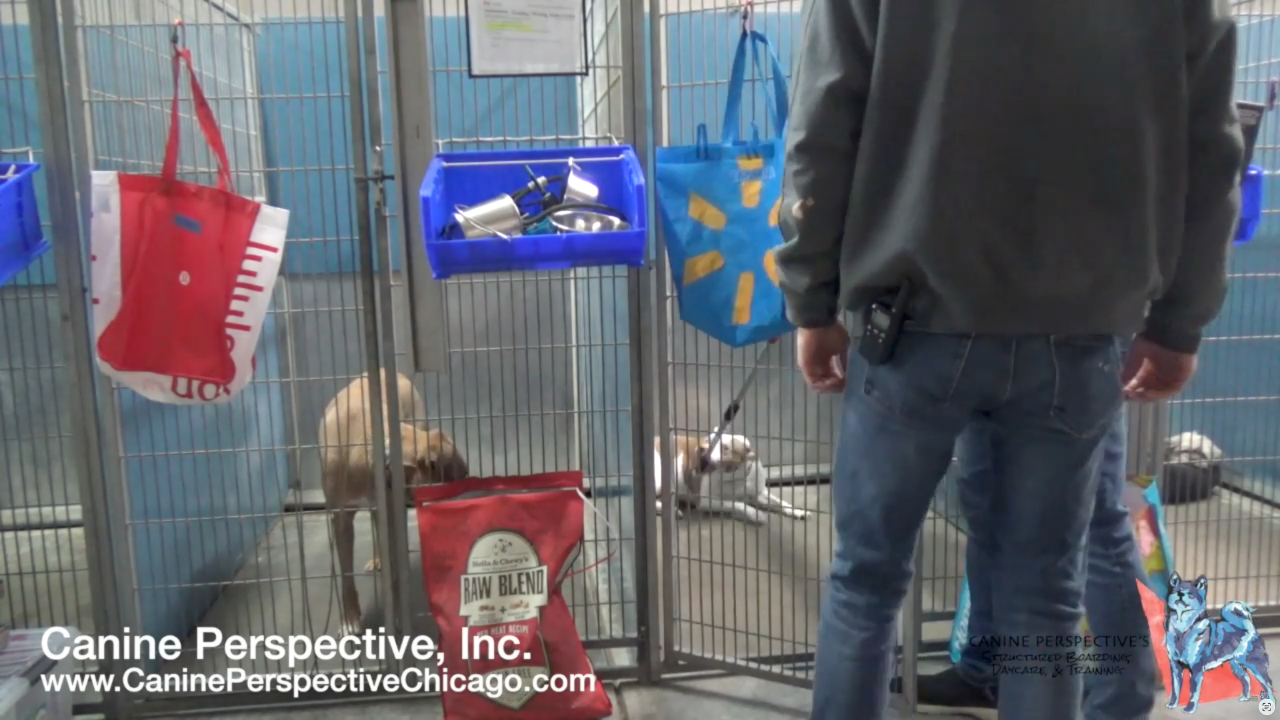
Cambria's response was exactly what we'd expect from a fearful dog.
Rather than launching into an all-out attack, she offered a brief defensive nip before retreating.
Once that initial contact was over, her body language shifted to signs of stress rather than aggression.
We observed:
lip licking
trembling
body tension
avoidance
These are classic indicators that fear—not confidence—is driving the behavior.
One thing many owners find surprising is that the most stressful moment is often getting the dog out of the kennel.
Once Cambria exited the kennel, her defensive behavior decreased significantly.
Could aggression still occur?
Absolutely.
No trainer should assume a dog is completely safe.
But the highest level of conflict often occurs during that first interaction when the dog feels trapped and vulnerable.
Once the dog has space and begins moving, their emotional state frequently improves.
At this stage of training, we weren't trying to eliminate Cambria's fear.
That comes later.
Instead, we were building the foundation necessary to safely work with her.
That included:
establishing safe handling procedures,
beginning remote collar conditioning,
creating predictable routines,
reducing unnecessary conflict.
Only after those foundations are established do we begin directly addressing the emotional side of the behavior.
Trying to "fix" fear before a dog can even be safely handled often creates additional stress for everyone involved.
Conclusion
Working with fear aggressive dogs isn't about overpowering them—it's about understanding what they're communicating while protecting everyone involved.
By following structured handling protocols, we can safely remove dogs from situations that once seemed impossible and begin the real work of changing behavior.
For dogs like Cambria, success starts long before behavior modification. It starts with earning the opportunity to help them.