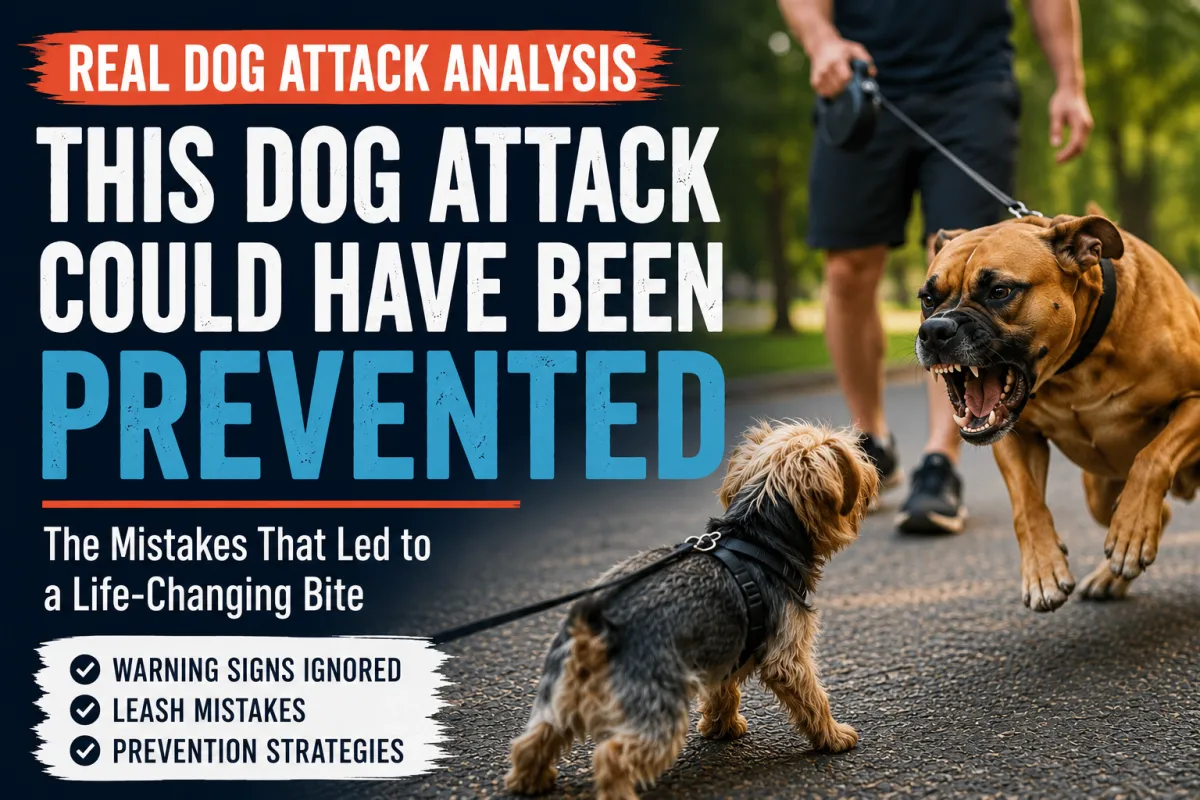
This Dog Attack Could Have Been Prevented
By Jesse | Canine Perspective
Dog attacks don't just happen "out of nowhere."
In almost every serious dog attack I've reviewed, there were warning signs long before the bite occurred. The problem is that most people don't recognize those signs until it's too late.
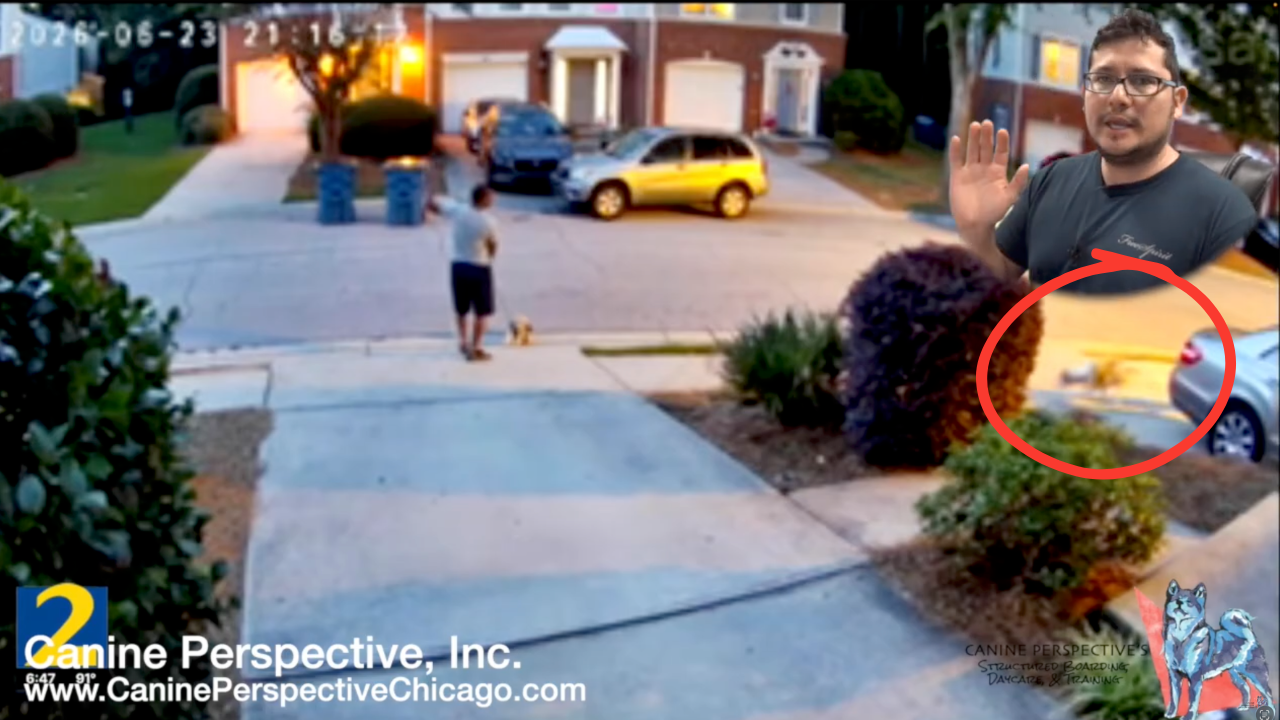
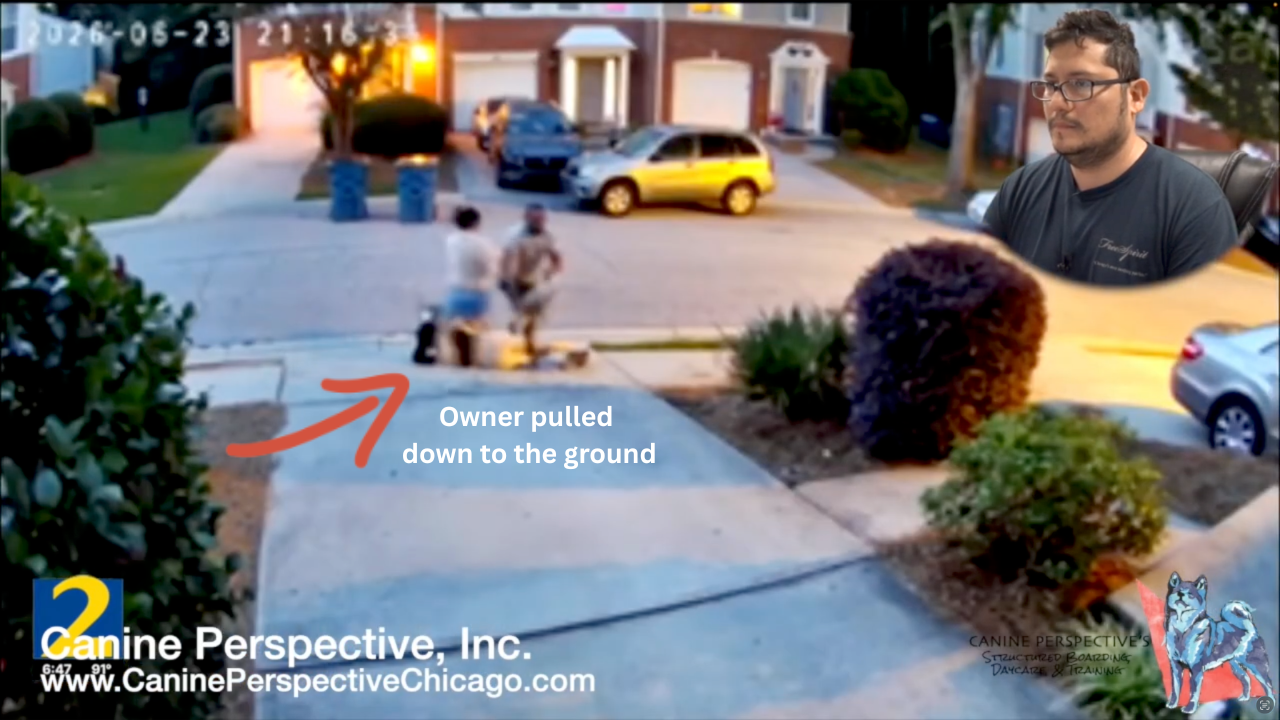
Recently, I reviewed a video of a man walking his small dog when he encountered a woman struggling to control a large dog on a retractable leash. Within seconds, the situation escalated into a devastating attack that left the man with severe hand injuries and permanently changed his life.
This wasn't simply bad luck.
It was a chain of preventable mistakes.
As dog owners, we have to learn to recognize danger before it reaches us.
In this case, the man could see the large dog from roughly 10–15 feet away. The dog was pulling hard on a retractable leash while dragging its owner forward. Those details alone tell me everything I need to know.
Whenever I see:
A large dog dragging its owner
A retractable leash
A harness on a powerful dog
An owner struggling to maintain control
I'm already creating distance.
I don't wait to see what happens.
I cross the street.
I change directions.
I remove myself from the situation.
That isn't fear.
That's good judgment.
One of the biggest lessons I teach during our aggression seminars is simple:
Always know your OUTS.
Many people become so focused on walking their dog that they stop paying attention to what's happening around them.
Instead, ask yourself:
Where is the nearest vehicle?
Can I step behind a fence?
Can I cross the street?
Is there another route available?
If you have the opportunity to avoid conflict before it begins, take it.
You never know which dog has poor training, weak equipment, or an owner who can't physically control them.
Watch the Full Breakdown
I'm not a fan of retractable leashes, especially on large, powerful breeds.
When paired with a harness, they create one of the worst combinations possible.
Here's why:
They give dogs too much freedom before the owner can react.
They encourage pulling instead of loose-leash walking.
They reduce the handler's ability to make quick corrections.
The cords can snap, wrap around people, or cause serious injuries.
Most importantly...
When a dog is already excited, frustrated, or reactive, additional leash tension often makes that emotional state worse.
That's exactly what we saw during this attack.
Many owners instinctively pick up their small dog when a larger dog approaches.
It's understandable.
But sometimes it actually increases the attacking dog's prey drive.
When you suddenly lift a frightened dog into the air:
Movement becomes more exciting.
The prey becomes harder to reach.
The attacking dog often jumps higher.
You expose your hands, arms, and face.
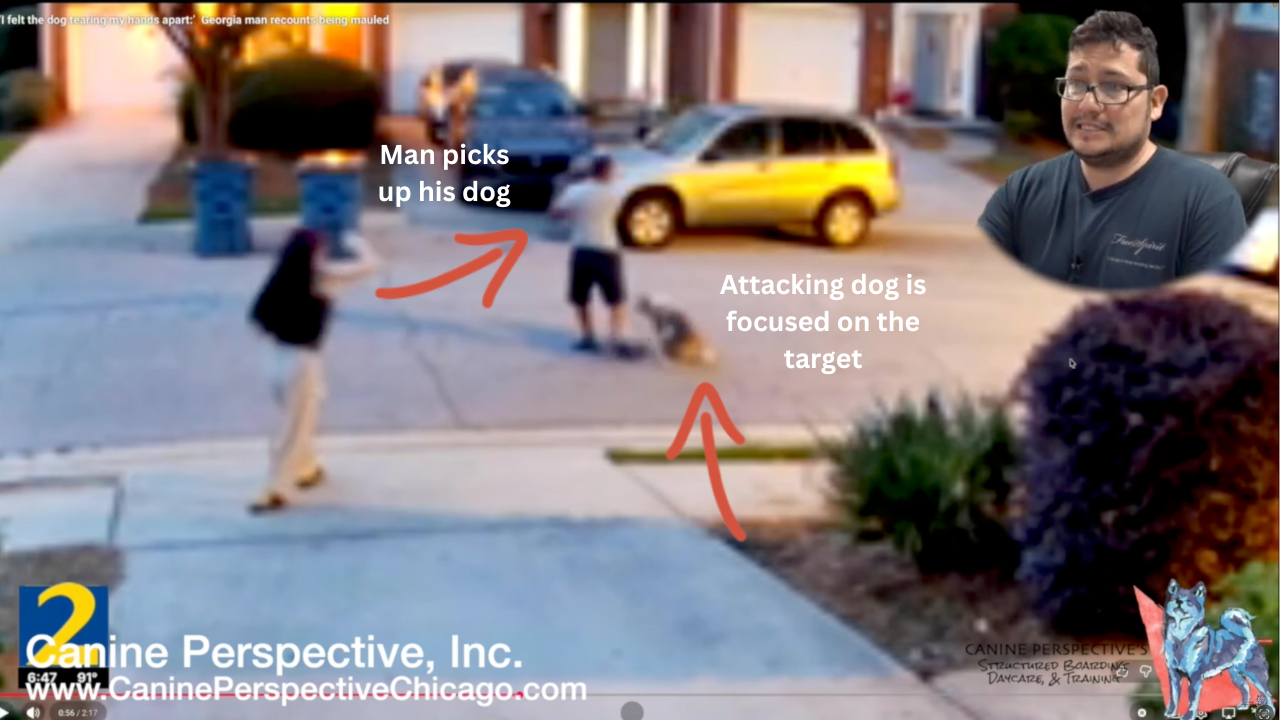
Every situation is different, but it's important to understand how predators respond to movement.
One thing I never criticize is panic.
Most people have never experienced a real dog attack.
When it happens, your brain doesn't think logically.
It reacts.
Unfortunately, panic often leads people to:
Pull away from a bite.
Run when escape isn't possible.
Forget obvious escape routes.
Lose awareness of what's happening around them.
That's why preparation matters.
The best decisions happen before the emergency—not during it.
The wrong equipment can turn a manageable situation into a disaster.
No training tool replaces proper training.
But poor equipment removes the little control an owner may have.
Every owner should ask:
Can I physically control my dog?
Is my equipment appropriate for my dog's size and strength?
What happens if my dog lunges unexpectedly?
If you can't confidently answer those questions, it's time to reevaluate your setup.
People often ask me what they should do once a dog attack starts.
The truth is...
I'd rather teach you how to avoid the attack altogether.
Yes, there are emergency techniques that can help once a bite occurs.
Yes, there are ways to safely interrupt certain attacks.
But if you never have to use them because you recognized the danger early, that's the best possible outcome.
Good dog handling isn't about reacting.
It's about preventing situations before they become emergencies.
Every dog owner has a responsibility—not only to train their own dog, but to recognize when another person's dog may become a problem.
Stay aware.
Trust your instincts.
Create distance when something doesn't look right.
One decision—crossing the street, changing direction, or taking the longer route home—may be the difference between a normal walk and a life-changing injury.
Because once a serious dog attack begins, the best opportunity to stay safe has usually already passed.
Should I pick up my small dog during an attack?
Sometimes this can increase prey drive depending on the situation.
Are retractable leashes safe?
For powerful or reactive dogs, retractable leashes significantly reduce owner control.
What should I do if I see a loose aggressive dog?
Create distance, avoid direct confrontation if possible, and always have an escape route planned.
Whether your dog struggles with leash reactivity, aggression, pulling, or poor obedience, our training programs focus on building reliable behavior in real-world situations.